On my feedback from our my second assignment from my tutor. She suggested that I start a few smaller sketchbooks for each medium so that I can explore painting techniques. Painting is something I am new to and I am learning through doing as I go along. However, I have no technical knowledge of how to paint. This is something that I have been meaning to learn more formally and I thought that my tutor’s suggestion would be really great for me.

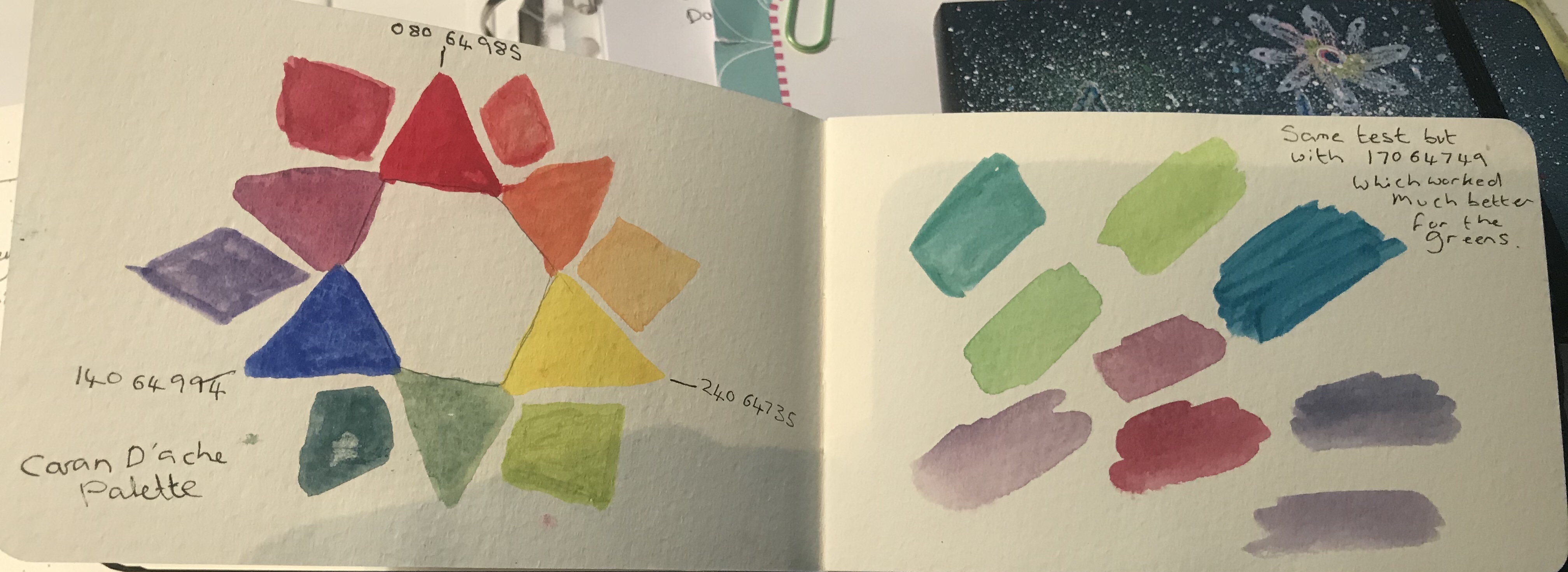
I purchased three A6 sketchbooks, one for gouache, one for acrylics and one for watercolour. I started by using the paints that I have, to paint colour wheels. I found a reference colour wheel online and used that to compare the colours that I was mixing. I tried to match the colour of the reference colour wheel each time, with each different set of paints. The reason for this was so that I could test the difference in the paints and see what happens when I try to mix same colours. I found that although some of the colours mixed as expected, when I mixed the secondary colours, the Greens did not always seem to come out as I had hoped. As the image below shows on the second page, I used the different blues and yellows that I had, to see how they mixed and whether I could match my reference colour will with those paints. Quite often these did mixed better.

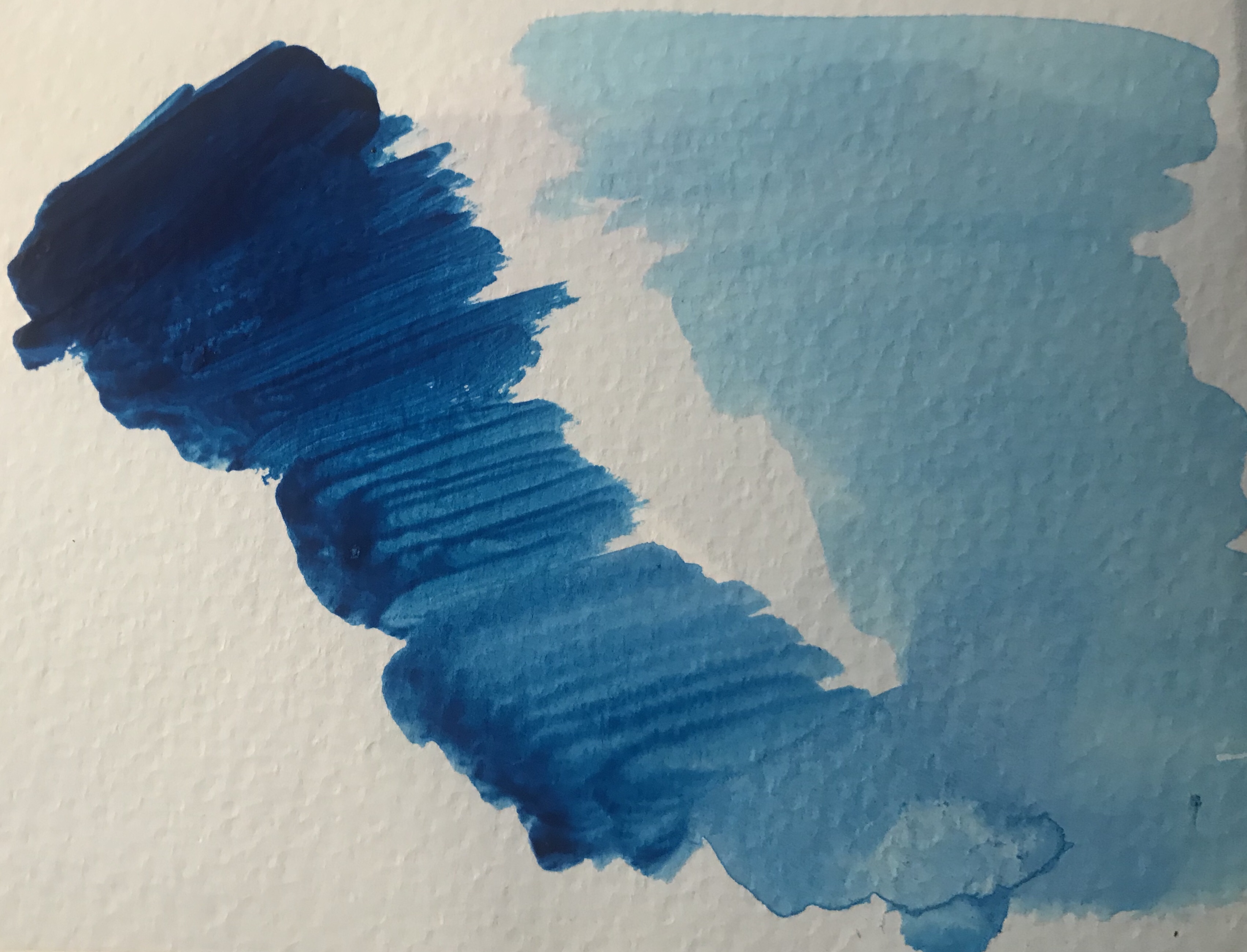
With the above image. I was testing the consistency of acrylic paint. I have successfully used acrylic inks. The however, I have not used acrylic paint before on paper. Acrylic paint is not something I’m used to and I was unsure as to what the consistency should be as I tend to see people painting rather heavily with this paint and not adding much or any water. Here I tested the acrylic paint neat and then gradually added a little more water until I got to a nice light wash. I really like the wash as the colour is very vibrant still and I like the way it looks on the textured paper.
With the image below. I was actually inspired by the paint marks on my kitchen-towel left from when I was doing my colour wheel. I liked the combination of colours together and also the overlapping lines. Therefore, I decided to use the leftover paint from my palate to experiment with, rather than wasting them. This was very therapeutic and pleasing to do. I like the way the colours overlap each other, but you can still see through them, almost as if this is glass or transparent plastic. This blue mark in the centre reminded me of a stained glass window.


After a recommendation from a friend. I got the book ‘If you’re bored with watercolour, read this book’ by Veronica Ballart Lilja. In this book. The author shares techniques on how to create textured paper. I had heard before that you can use salt on your watercolours and it soaks up some of the paint, leaving patterns underneath. It was also suggested in this book, so I thought I would give it a go. For this one I used table salt because at the time it was all I had. I thought that perhaps this would not work as well, as it would give me just small particles of salt. Therefore, I assumed a very even pattern would be left behind. However, as you can see, this is not the case. On some parts of the painting, it did just stick to the page and did not create much paint lift. On other parts of the page, it created striking patterns, as in the top right red. I really loved this section and feel like I can see an ostrich in that splodge. I was quite struck by how different every patch came out. There seemed to be no repeating pattern happening and I wonder what conditions each patch of paint was in at the time I added the salt, and whether I could replicate the effect easily. I imagine that this is affected by how wet the paint is at the time of adding the salt, how thick the paint is and perhaps even some colours may react differently to the salt. These are things that I intend to explore further, as well as trying this again using rock salt both whole and partially crushed to see what effect that has.
I have enjoyed my experimentation so far and endeavour to keep adding and experimenting in these sketchbooks.

 Ashley's OCA Illustration BA Blog